Now What?

Painting should call out to the viewer . . . and the surprised viewer should go to it, as if entering a conversation.  

                                                                                                                                                                                             Roger de Piles, 1676

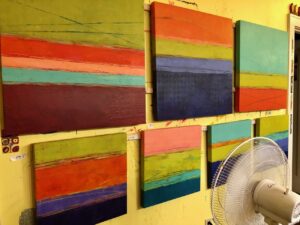
The dust has hardly settled and I’m already looking ahead to 2021, although I’ve got a jump start on a couple of projects while it is still 2020. But first, my show at RiverSea, Emotional Alignments, gets hung next week and the opening reception will be held on Saturday, January 9, from 12-8 pm during the Astoria Art Walk. I’ll be at the gallery that evening from 5-8 pm if you happen to be out and about.

Nine of 20 pieces in the Emotional Alignments show, opening January 9, 2021, at RiverSea Gallery in Astoria, Oregon

Most people would probably wait until after a show has opened before starting work on another show, but I’m not most people. So forward I go, taking full advantage of making art during a pandemic. Early preparations have begun for a May, 2021 show at Salem on the Edge. Very preliminary preparations, lining up which boards I want to use, getting them painted, plaster applied, sanding them outside (weather permitting), and then getting them sealed and ready for applying oil and cold wax. As of this writing, I  have no idea what my theme or composition will be – that will come in the new year.


In my next post, I’ll share about another project I’m currently working on . . . . .

When a Deadline Looms

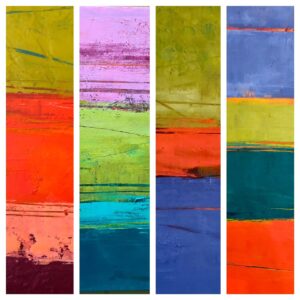
If you read my last post, I shared about my upcoming show at RiverSea Gallery in Astoria and how my initial idea was the theme of waterlines, but somewhere along the way I realized it was no longer a theme I wanted to explore. Instead, I started thinking in bands and swaths of color, a design element I have been smitten with for years. My thoughts went to how I have always been attracted to color field art, so as I painted and worked on my boards, the idea of working in fields of color filled my consciousness. The words Emotional Alignments became the title of my show, and propelled me forward. I knew where I was going and I was excited to get into my studio every day; I had an enthusiasm I hadn’t had in a long time.

After getting all of my boards prepped, I kicked into full time painting, spending several hours a day in my studio adding layers of oil and cold wax. In my last post, I shared the process of how I prepare my boards with acrylic paint, plaster, and more acrylic paint, and now I’m showing and sharing the process of adding layers of oil paint mixed with cold wax.

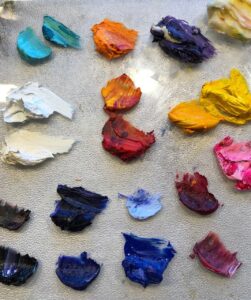
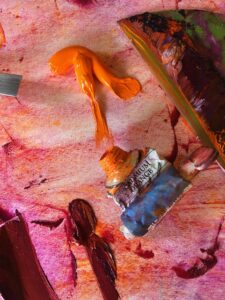
The first order of business is to mix up cold wax with Galkyd (which helps speed the drying time), then mix oil paints with the wax mixture, making it the consistency of whipped butter (or shortening if you are old enough to remember that cooking staple).
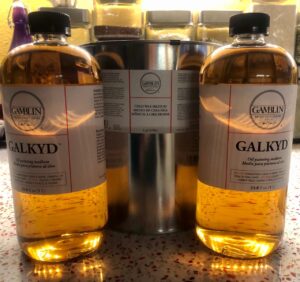
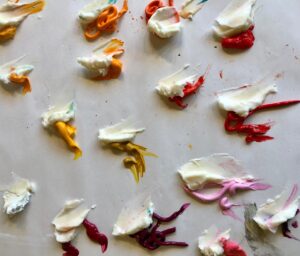
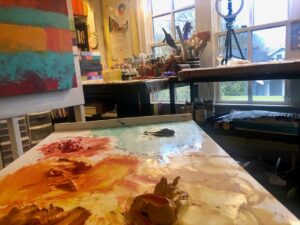
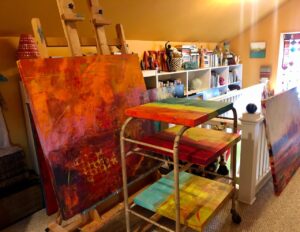
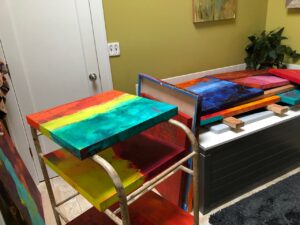
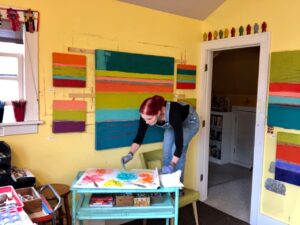
I use the early layers to just get color down so I have something to respond to. I’ve been working on 20 pieces simultaneously, so drying space is at a premium, necessitating spreading out into our bathroom and the upstairs hallway.
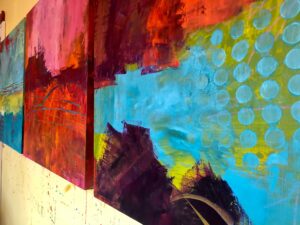
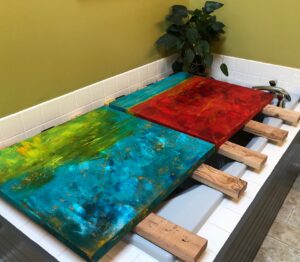
Once I have one or two initial layers of oil and cold wax, often alternating between warm and cool colors so when I’m scratching through the wet paint, the earlier layer is revealed, it is time to begin thinking about a composition. I knew I would be focusing on bands of color, so I just started painting swaths, giving some thought to color, but not too much advance planning at this stage.
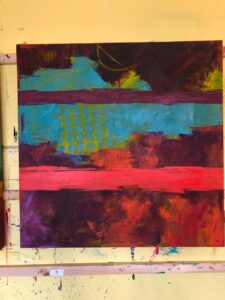
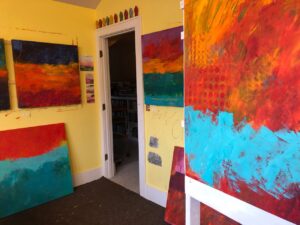
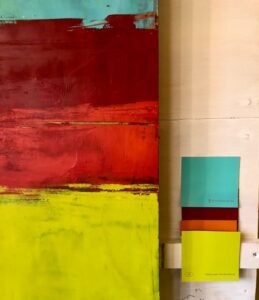
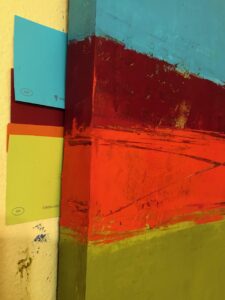
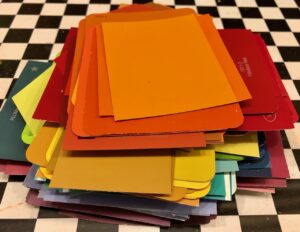
Eventually, I had another layer on the boards and it was time to begin making more informed choices to add variety within the swaths: warm against cool, texture against smooth, bright against dull, light against dark, busy against calm. I had the idea of using paint chips (from the hardware store) to play with color combinations.
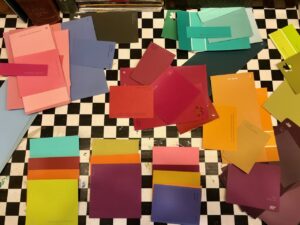
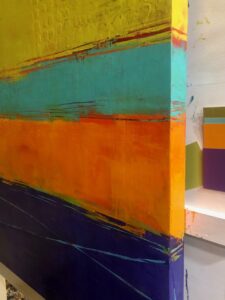
I also gave a great deal of attention to the intersections between the bands of color, the interstices. I have long been fascinated with intersections: drawing into the layers to reveal earlier layers, what colors show through, adding lines of color with the edge of a squeegee, how to create bold interest, how to create quiet interest that invites a viewer to step closer to see the details.

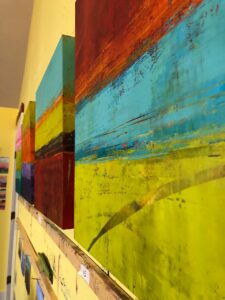
 

And so it goes. Back and forth, adding, subtracting, standing back, scraping, excavating, laying down more paint. Mental and physical gymnastics.
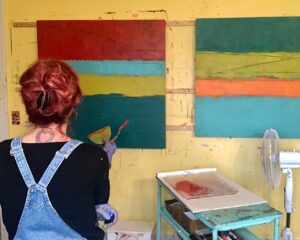
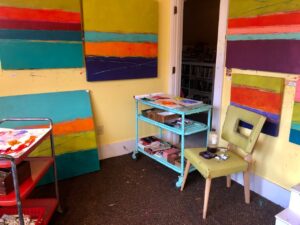
Between painting sessions, is the inbetween, the drying time. I set up a fan and a heater to blow warm, dry air around my studio, a time for the paintings to rest, a time for me to rest. It all seems to help.
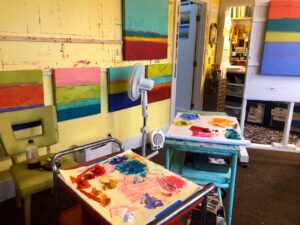
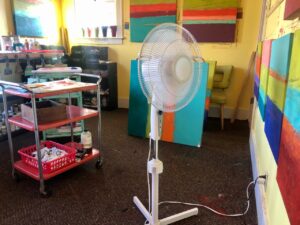
Paintings are being completed and I’m excited about them. They reflect how I have moved through the pandemic, politics, wildfires, and personal traumas this past year. Titling the pieces has been as therapeutic as painting them. I think I might just be okay.
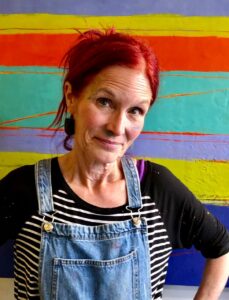
In my next post, I’ll share the completed pieces. The show, Emotional Alignments, opens Saturday, January 9, 2021, at RiverSea Gallery as part of the Astoria monthly Art Walk.
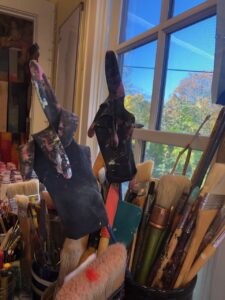
 

The Arduous Task of Preparing for a Show

For the past couple of months I have put my nose to the grindstone. Being in the middle of a pandemic, life outside my house has been meager, so in many ways this has been the ideal time to put myself into a self-imposed studio timeout. I had the opportunity for a show at RiverSea Gallery, a contemporary art gallery in Astoria on the Oregon Coast. I have had art there for several years, I’ve been in group shows, and two years ago I had a show with my friend Stephanie Brockway. I had been thinking about asking for a solo show, but had never approached the gallery owner, Jeannine. Until October. I met with Jeannine and because of the pandemic, she was juggling the rescheduling of shows from 2020 into 2021; then she said that an artist had just cancelled for January 2021 and I could have that slot. In the big gallery. Gulp. Yes, please. Let the madness begin.

I work in layers. Many layers. It goes something like this. Gathering boards and painting them with a layer of acrylic or house paint. Once dry, I slather on a layer of plaster, which needs to dry overnight. The plastered boards are then schlepped outside to be lightly sanded, brought back into the studio, and sealed with a layer of acrylic stain. I like to baptize my boards with words, so I usually scribble a quote or something about how I’m feeling. Then I’m ready to begin actually painting. Because words don’t quite capture the physicality of this process, here is my photo essay depicting the first round of layers.


Now the boards are ready for painting.

When I originally pitched my show to Jeannine, my idea was for a show about waterlines, something I have been passionate about exploring for years. But as I began applying the initial layers of oil and cold wax, I realized the show was no longer about waterlines. When I needed to send an image to Jeannine for her November newsletter, I sent her this message:

I have been consistently working since we met in October, moving forward with the theme of Waterlines. I prepped 15 boards (20×20 inches up to 40×40 inches) with acrylic, plaster, acrylic, and then one to two layers of oil paint mixed with cold wax. As I began the process of reconciling the under layers with a finished composition, it became apparent that my heart wasn’t in a strict interpretation of waterlines. My original vision for the show was bold swaths of color representing waterlines, but as I began applying paint in bright bands of color, I realized what I was experiencing was more than waterlines; it was an emotional response to 2020: the pandemic, politics, and wildfires (as well as a series of personal family hardships). Waterlines always find their way into my pieces as inspiration, but this show isn’t about waterlines, but my emotional response to 2020. So things have changed a bit. I have titled the show: EMOTIONAL ALIGNMENTS. Once I started making this shift last week, my painting took off. I start my days enthusiastic and excited to get into the studio.

In my next post, I’ll share about the evolution of my paintings (now at 20 works in various stages of completion) using oil paint mixed with cold wax medium . . . . and the many hours I spend in my studio.


New Studio? Almost . . . . .

I came very close to signing a lease on a new studio this week. It was bigger, in a great location, and an affordable price. I’m in the middle of preparing for two major shows in 2021, so I was feeling cramped in my current home painting studio and felt like more wall space would help reduce my anxiety.
It was election day that I looked at the space and I was initially excited about the possibilities. Then I came home and really began thinking about it. I would need to cover the floor with canvas and the walls with plastic. Did I really want to paint in a Dexter kill room?  The lighting wasn’t great, but that was solvable. One thing after another and I began to feel more and more unsettled. Or maybe it was just election jitters. And then late into the evening, I knew that this new studio space was not the right fit for me. I conveyed my decision to my most ardent supporter, Howard, and at around 11:30 pm he popped out of bed and walked into my studio, turned the lights on, and just stood there. What can we do to make this space work better for you?  

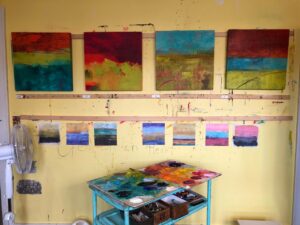
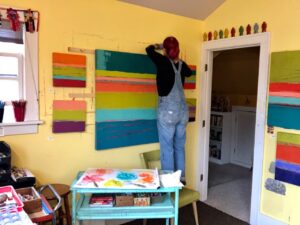
A couple of ideas emerged from our midnight chatter. My shelf of vintage dolls and doll heads would need to come down so I could appropriate that space for studio storage (what!?!).  I would move my bookshelf so that that wall space could be converted to an area to hang a painting and make my painting supplies more accessible. But probably the best idea of the night: Howard would build me a movable wall so I could hang and work on two additional paintings.

The next day, Howard headed to the hardware store, bought supplies, and spent the rest of the day in the garage building me my movable wall. I’m in love! Not only with that guy in the garage, but with my new wall.

I took down all of my dolls.

I moved my bookshelf (with a little purging) to the closet and moved all of my boards at various stages of completion to the top shelf where the dolls used to live.

My space isn’t perfect, but it is sure a lot more useful. And I still need to use our upstairs landing for storing larger boards and for boards that are drying. Boards are still drying in our bathroom on top of the bathtub, but it is better than moving into a space that wasn’t the right place or the right time.

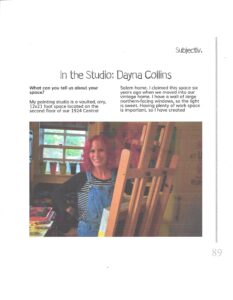
If you are curious about what my studio looked like last week, go take a look at the fall issue of Subjectiv: A Journal of Visual and Literary Arts, where my previous studio is featured on pages 89-96!

Subjectiv. A journal of visual and literary arts

I am delighted to share the Fall 2020 issue of Subjectiv: A Journal of Visual and Literary Arts. This is a stunning online journal, filled to the brim with art and words. Riis Griffen is the editor and C.W. Griffen is responsible for the layout. I was contacted by Riis the end of August, asking if I would be the featured artist for their In the Studio article. Hello, yes, please.

Interview questions were sent, answers written out, photos were taken, photos were edited. And now here it is, in living color, a beautiful reminder of how art and words heal, help us process, bring joy, teach us to solve problems, and as Riis says in the opening of this issue, I hope you can find a few moments of peace browsing through these pages, and enjoy a break from the tumult of the world.

There are two ways to view Subjectiv. You can go to the website by clicking HERE (you can also see past issues by using this link). Or if you prefer to view it in a magazine format, click HERE.

A teaser . . . you can read my interview and see photos on pages 89-96.


Salem Art Group Daily Art Challenge

In July, my Salem Art Group hosted a 31-day art challenge, inviting the community to join our group in doing something creative every day for a month and posting on Instagram. I joined the challenge and managed to create something for all 31 days. I wasn’t always on time with my work or my posts, but I completed the challenge. Some days I did a little painting in my journal, other days I painted on 12×12 wood panels. And a few times, I did scut work, like prepping a bunch of panels. Most days I wandered into my studio and did something, but this challenge insured that I would go in and at the very least, create a collage or a small painting in my visual journal.

In no particular order and not all of my posts, here is a sampling of what I did during July to participate in the Daily Art Challenge.

Daily Art Practice: Visual Painting Journal – Final Pages

I did it! During 2019 I set a goal of painting in my visual journal every day. I sometimes fell behind if I was out of town, other times I took my paints and journal along with me and kept up. I fell waaaayyy behind in mid December and it took me until mid February to get completely caught up, but family medical emergencies are never convenient.

I filled 6-1/2 visual journals (I wrote about my process and the type of journals I used here) and created 366 pages of paintings (I accidentally painted two pages for the same day). Throughout the year I did blog posts sharing about my project and posting photos of my favorite pages; now I want to share some final photos of favorite pages created since my last post in early November.

November 9, 2019
Dayna J. Collins
November 10, 2019
Dayna J. Collins
November 13, 2019
Dayna J. Collins
November 19, 2019
Dayna J. Collins
November 22, 2019
Dayna J. Collins
November 24, 2019
Dayna J. Collins
November 30, 2019
Dayna J. Collins
December 1, 2019
Dayna J. Collins
December 3, 2019
Dayna J. Collins
December 4, 2019
Dayna J. Collins
December 5, 2019
Dayna J. Collins
December 6, 2019
Dayna J. Collins
December 9, 2019
Dayna J. Collins
December 13, 2019
Dayna J. Collins
December 22, 2019
Dayna J. Collins
December 25, 2019
Dayna J. Collins
December 26, 2019
Dayna J. Collins

It was a great year. Some of my takeaways:

  • I challenged myself to get into my studio every day.
  • I experimented with new ideas.
  • I pushed myself to use different colors and compositions.
  • I explored using a bigger vocabulary of marks and lines.
  • I challenged myself to be bold and at times audacious.
  • I had fun, which helped me paint loose.

Mission accomplished.

Page dividers from the past year.

And now I’m doing something different for 2020. . . . . . .

Daily Art Practice: Visual Painting Journal – Selected Pages

I will soon complete journal #6 in my quest to do a daily painting in my visual journal throughout 2019. We’ve been revamping a house in Astoria on the Oregon coast, so I’m about a week behind  two weeks behind in my daily paintings, and I plan to get caught up after Thanksgiving. Yesterday I cataloged the pages I have completed since early October, so I thought I would share some of my favorites.

October 6, 2019
Dayna J. Collins
October 7, 2019
Dayna J. Collins
October 8, 2019
Dayna J. Collins
October 9, 2019
Dayna J. Collins
October 10, 2019
Dayna J. Collins
October 20, 2019
Dayna J. Collins
October 23, 2019
Dayna J. Collins
October 23, 2019
Dayna J. Collins
October 27, 2019
Dayna J. Collins
October 28, 2019
Dayna J. Collins
November 3, 2019
Dayna J. Collins
November 4, 2019
Dayna J. Collins

Daily Art Practice: Visual Painting Journal – Recent Pages

August 27, 2019
Dayna J. Collins

Time for an update of my year long project of painting in a visual journal every day. Here’s a selection of pages from late summer through early fall. Favorites:

August 11, 2019
Dayna J. Collins
August 12, 2019
Dayna J. Collins
August 31, 2019
Dayna J. Collins
September 1, 2019
Dayna J. Collins
September 4, 2019
Dayna J. Collins
September 5, 2019
Dayna J. Collins
September 14, 2019
Dayna J. Collins
September 16, 2019
Dayna J. Collins
September 18, 2019
Dayna J. Collins
September 19, 2019
Dayna J. Collins
September 21, 2019
Dayna J. Collins
September 22, 2019
Dayna J. Collins
September 25, 2019
Dayna J. Collins
September 27, 2019
Dayna J. Collins
September 28, 2019
Dayna J. Collins
September 29, 2019
Dayna J. Collins
September 30, 2019
Dayna J. Collins
October 2, 2019
Dayna J. Collins
October 5, 2019
Dayna J. Collins

Themes continue to emerge: Play, experimentation, circles, layers, mark-making, revealing, excavation, color, lines . . . . and I’m in the final three months of my project.

Daily Painting Journal: How I Do It

Several people have asked me if I plan to offer a class on how I keep a daily painting journal. Whenever I’ve been asked, I’ve thought, I just paint something every day in a book. But there is more to it than that, so rather than a class, I thought I would share using my blog as the means to convey the details of what I do and the benefits of why I do it.

I’ll start with why I decided to keep a daily painting journal. The simple answer is I wanted to have a prompt or motivation to get me into my studio. I figured if I set an intention to do a small daily painting, I might just linger and do something else and build upon the time I spend in my studio. Many times that has happened, but other times, I do my painting and that is it for the day; but it is something.

Another reason I decided to start a practice of creating a small painting in a journal is that it allows me to experiment and play with ideas. By creating in a small journal, the painting isn’t precious, it isn’t for anyone but me, and it allows me a certain amount of freedom that painting on a large canvas or painting for a show doesn’t allow me.

What I learned along the way:


  • It’s fun. Sometimes I don’t want to stop and I allow myself to put leftover paint from my current page onto the next day’s page so I have something to respond to the next day.


  • It isn’t precious when it’s in a journal. It seems my inner critic is quieted by painting on the page of a journal. I approach it as just practice or at best playtime, so the censors are muted.


  • I was inspired along the way. I often use my daily journal pages as inspiration for bigger paintings, either in acrylic or in oil and cold wax. The pages allow me to play with colors and compositions so when it is time to show up in the studio and create bigger pieces with a deadline or for some other purpose, I have lots of ideas to choose from and use as a spring board, even if the finished piece looks nothing like my journal page.

My process:

  • It is important to have a dedicated space for doing my daily paintings. I have a table set up in my studio with acrylic paints, paintbrushes, palette knives, a brayer, water, paper towels, and mark-making implements such as pencils, acrylic paint pens, and oil pastels.

  • I use a 9×9 inch Super Deluxe Mixed Media journal by Bee Paper Aquabee (manufactured in Beaverton, Oregon). The journal has 60 sheets and the pages are 93 lb. weight; the journals retail for $21.25 (and at the time of this blog post, they are on sale at Dick Blick for $10.04).

  • I cover each journal with handmade paper, using sandpaper to rough up the cover’s surface, then adhering the paper with matte medium.

  • When I started this project at the beginning of the year, I painted an entry on each side of the page, but after a few days I wondered if I might want to do something with the individual paintings, i.e., pull them out and hang them for a show, or pull them out and mount them to a panel. If I had paintings on each side, I wouldn’t be able to do either of those things, so I quickly abandoned double-sided painting and now use one page for each daily painting. I go through journals more quickly, but I have options if I choose to do something with all or some of the paintings in the future.


  • I use acrylic paint on the pages. A few times I’ve incorporated collage, but so far the focus has primarily been on creating abstract paintings. For making marks, I use No. 2 and Stabilo pencils, Woody chunky crayons, acrylic pens, and oil pastels.


  • In my first four journals, my paintings are in the middle of the page, going out toward the edges, but not to the edges. When I started my fifth journal on August 11 (Day #223), I was ready to mix it up and started painting all the way to the edge on all four sides.

  • I let the paintings dry thoroughly, but for the first few days after I have painted a page, I insert a piece of wax paper to prevent the pages from sticking together.

  • I number and date each page, and then photograph each painting, which I store on my computer by the “day” number.


  • I regularly post photos of my daily paintings on Instagram and on my Facebook art page; I share selected photos on Pinterest, and on occasion, I do a blog post highlighting some of my favorite pages. Here are links to previous posts:

January 25, 2019

March 27, 2019

May 28, 2019

August 2, 2019

I recommend giving a daily painting journal a try, using my methods or coming up with something that works for you. The benefits are more than worth the effort and I love watching my journals stack up.